
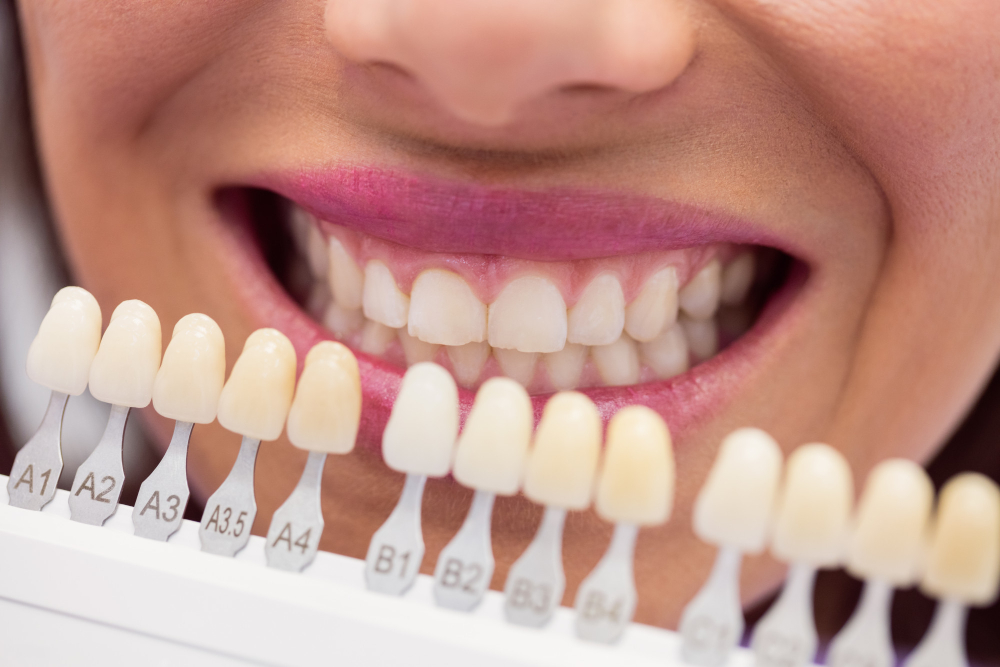
Veneers
Veneers are very thin, tooth-colored shells made of ceramic that are custom-fit and bonded to the front of teeth. They provide a white, even, and attractive smile while addressing a variety of dental concerns, including:
- Spaces between teeth
- Chipped teeth
- Yellowing or stains
- Misshapen or crooked teeth
- Small holes or pits in teeth
- Uneven or undersized teeth
Most veneers are permanent and tightly bonded to the teeth, with advancements in technology allowing some types to last 20 years or more.
Types of Veneers
Porcelain or Indirect Veneers
Porcelain veneers are custom-made in a laboratory and provide superior stain resistance and a natural shine. This process requires two appointments: one for taking impressions and another for preparing the teeth and placing the veneers. Examples of thin porcelain veneers that often do not require tooth reduction include Lumineers® and Vivaneers®.
Composite or Direct Veneers
Composite veneers can be applied in a single visit and are less expensive. They require minimal tooth preparation, can expand and contract with natural teeth, and are ideal for repairing fractured teeth.
The Veneer Procedure
The placement of porcelain veneers typically involves three appointments:
1. Diagnosis and Treatment Planning
The dentist evaluates the teeth to ensure veneers are appropriate. X-rays may be taken, and the patient is informed about the procedure’s capabilities and limitations. Patients can participate in planning the restorative design.
2. Preparation
The teeth receiving veneers are lightly buffed to prepare the surface for adhesion, usually reducing the tooth by about 0.5 millimeters. Impressions are taken and sent to a lab for custom fabrication. Temporary veneers may be placed while the final veneers are made, usually within one to two weeks.
3. Bonding
The veneers are tested for fit and color using water or glycerin. The cement shade can be adjusted to match natural teeth. Once finalized, bonding chemicals are applied to the tooth, dental cement is placed, and a special light hardens the cement quickly.
Care and Maintenance of Veneers
Veneers should be maintained like natural teeth, with regular brushing and flossing. Non-abrasive toothpaste is recommended. Some sensitivity to hot and cold may occur initially due to enamel reduction but typically resolves within one to two weeks.
With proper care and regular dental visits, veneers can provide long-lasting improvements to the appearance of your teeth, helping you achieve a beautiful, confident smile.