
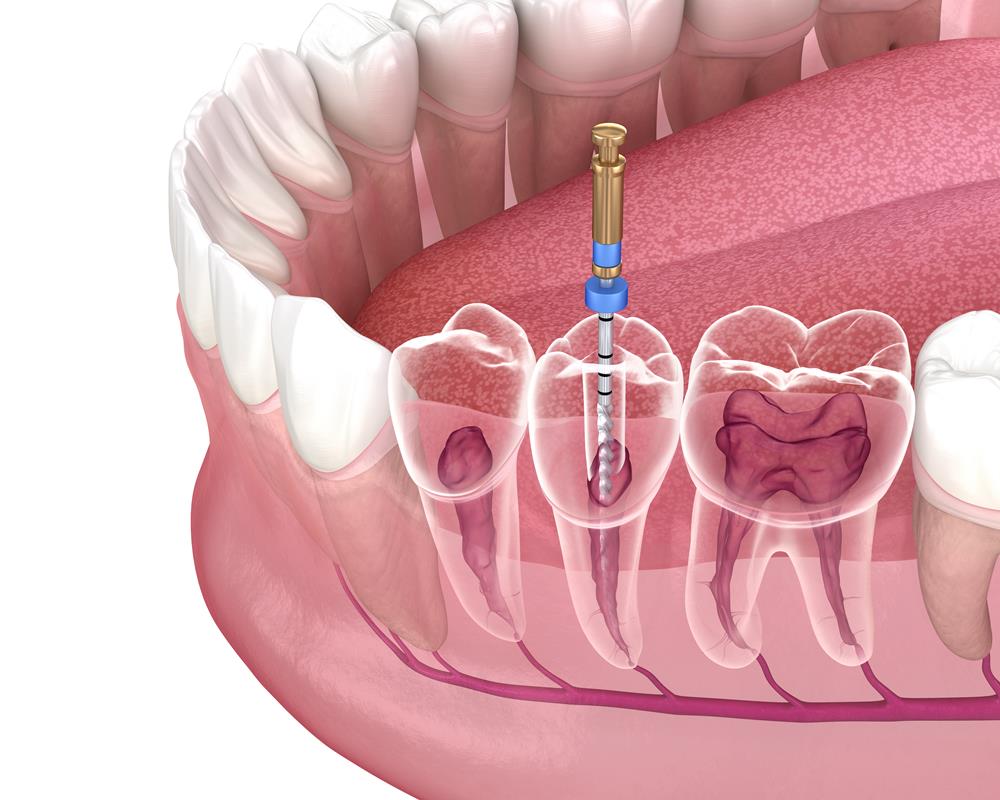
Root Canal
A root canal is a common endodontic procedure used to treat problems within the tooth’s soft core, known as the dental pulp. The pulp, located inside the tooth from the crown to the root tip, contains nerves, blood vessels, and connective tissue that provide nutrients during tooth development.
Request an AppointmentFunction of the Dental Pulp
During tooth development, the pulp nourishes the tooth and supports proper growth. Once fully developed, the tooth can function without the pulp, as the nerves are no longer essential for tooth vitality or sensory functions. This allows the removal of the pulp to treat infections and save the tooth.
Damaged Pulp
The pulp is most often damaged by untreated cavities, which allow bacteria to penetrate the enamel and infect the pulp. Trauma can also cut off the tooth’s blood supply, causing the pulp to die. If left untreated, the damaged pulp can lead to an abscess, bone damage, and severe pain.
Symptoms of Damaged Pulp
- Severe toothache
- Prolonged sensitivity to hot or cold
- Discoloration of the tooth
- Swelling
- Tenderness
- Recurring pimple on the gums
Prompt treatment is recommended to relieve symptoms and prevent permanent damage.
The Root Canal Procedure
Root canal treatment is usually performed over multiple visits:
- First Visit: The dentist opens the tooth to access the pulp chamber and removes the damaged pulp. The root canals are cleaned and shaped to prepare for filling. A temporary filling protects the tooth between visits, and medication may be prescribed to control infection.
- Second Visit: The temporary filling is removed, and the pulp chamber and canals are cleaned and filled. Gutta-percha, a biocompatible rubber-like material, is used to fill the canals and is sealed with a sealer paste. The tooth is then restored with a crown, post, or other restorative device.
Local anesthesia is used to numb the area, making the procedure comfortable, even if the nerve tissue is dead.
Risks of Root Canal
While root canals are highly successful, there is a small risk of reinfection, particularly in teeth that have undergone multiple treatments. Rarely, damage to the tooth may occur during the procedure.
Results of Root Canal
Root canal treatment is highly effective in relieving symptoms. With proper restoration, the treated tooth will look natural, and most patients achieve long-term success. Maintaining good oral hygiene and regular dental visits helps ensure the longevity of the treatment.